Earn 9%–15% on Senior Secured Bonds.
Lower risk. Fixed returns. Start investing on Aspero with just ₹10,000.
Explore Bonds


How to Choose the Right Bond for Your Goals
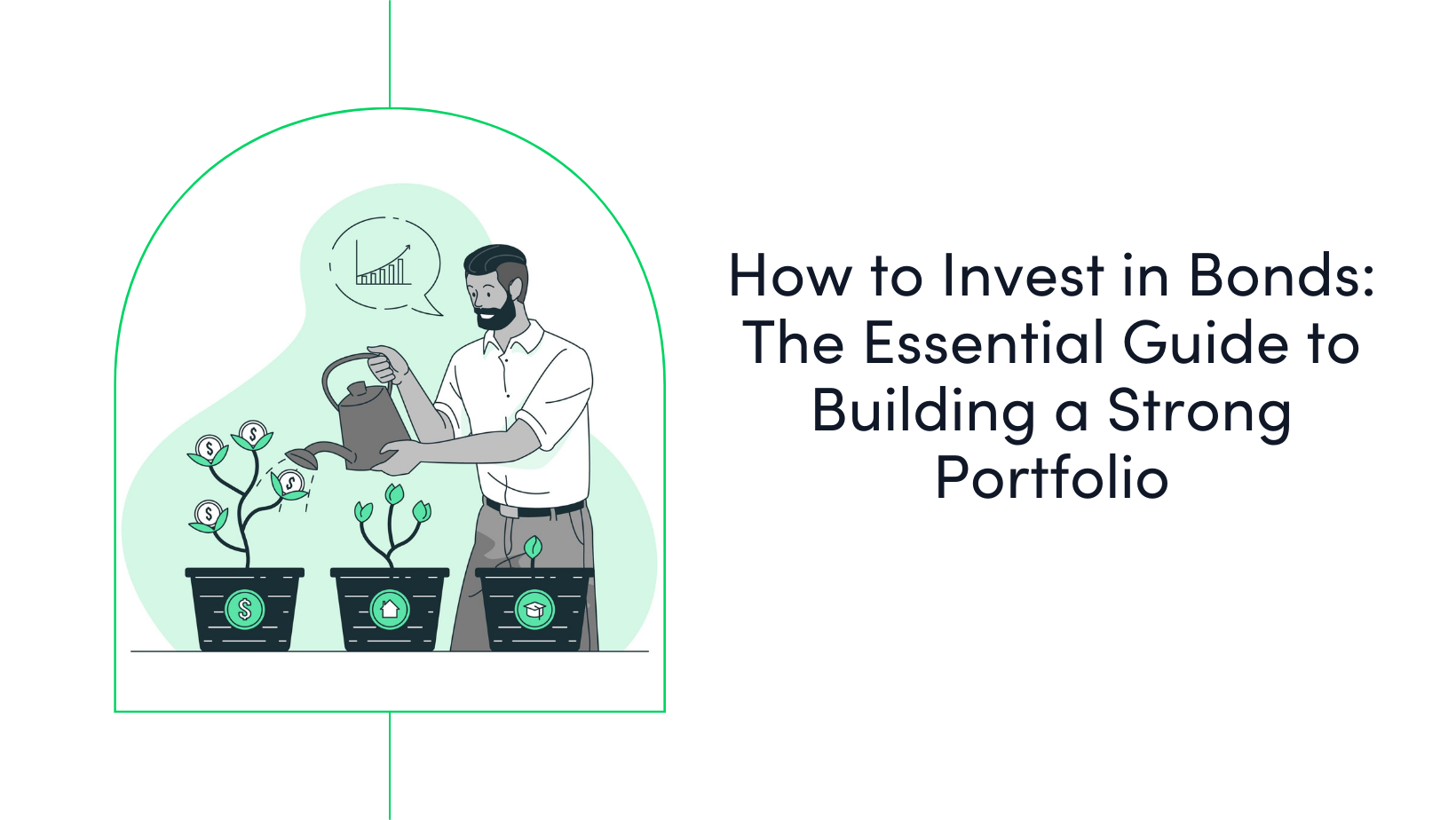
Bonds are one of the most underrated fixed-income assets available to Indian investors. They sit between the low returns of traditional bank deposits and the high volatility of equities — giving you the opportunity to balance safety, income, and growth in your portfolio.
With the right understanding of credit ratings, issuer fundamentals, maturity profile, and payout structure, bonds can become a reliable and strategic part of your investments.
Understanding Ratings & Risks

Credit Rating
Credit ratings (AAA, AA, A, BBB, etc.) indicate the financial strength and repayment capacity of the bond issuer. These ratings are given by agencies like CRISIL, ICRA, CARE, and India Ratings.
-
AAA to AA-rated bonds
→ Usually issued by government-backed entities or large NBFCs
→ Lower risk, lower return (typically 7%–9.5%)
→ Ideal for conservative or first-time investors -
A to BBB-rated bonds
→ Often issued by growing companies or NBFCs with higher yields (10%–15%+)
→ Slightly higher risk, but can be worthwhile if the issuer has strong fundamentals
→ Best for moderate to aggressive investors looking for better returns
Pro Tip:
A BBB-rated bond from a company with solid financials, no history of defaults, and a short remaining maturity (1–2 years) can offer excellent yields with manageable risk.
Beyond Ratings — What Else to Check

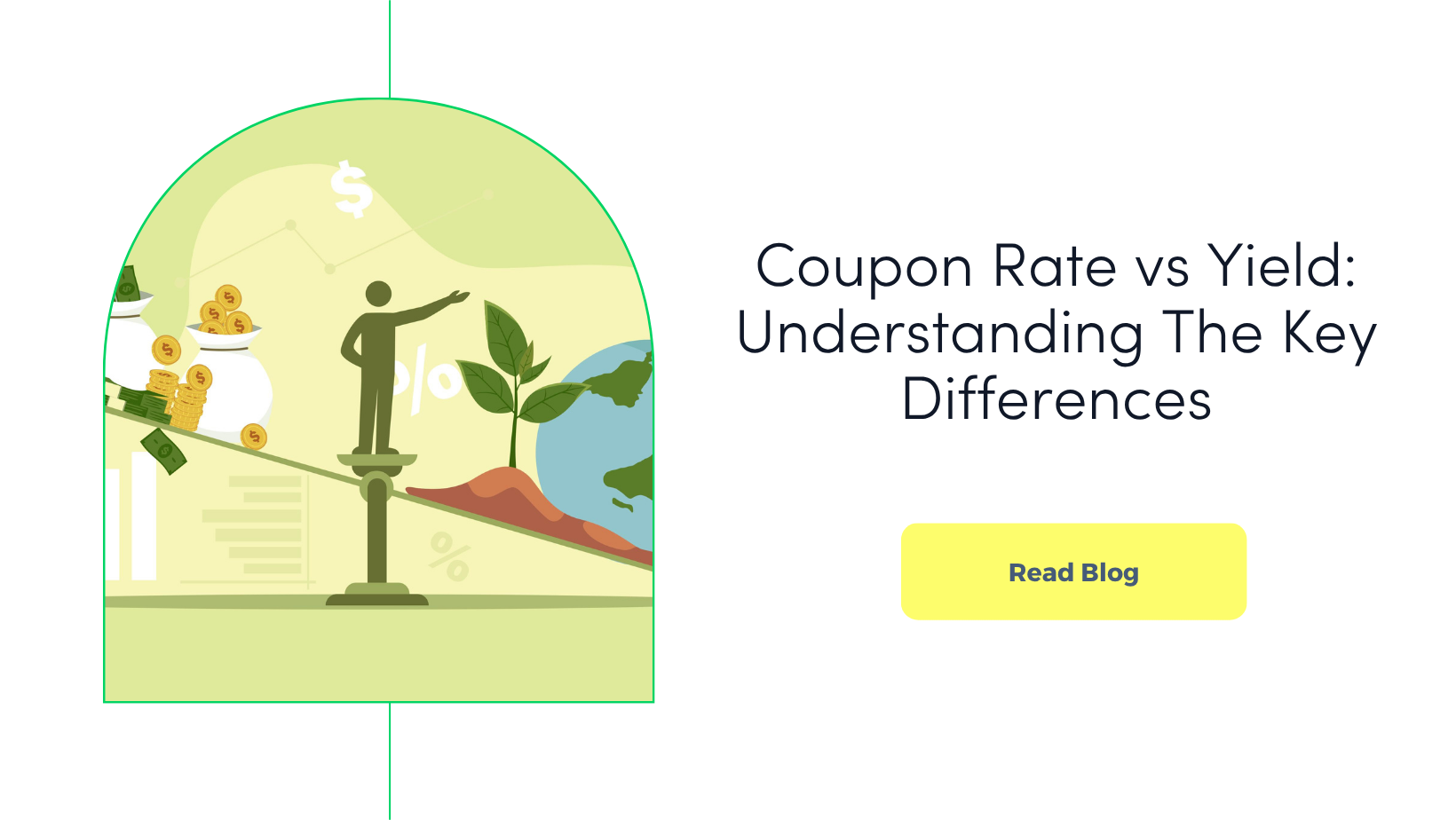
Coupon Rate v/s Yield To Maturity
1. Coupon vs Yield to Maturity (YTM)
-
Coupon Rate: The fixed annual interest rate the bond pays on its face value.
-
YTM: Your actual annualized return if you hold the bond till maturity, factoring in the bond’s market price and interest payouts.
➡ Always check YTM, not just the coupon — especially for secondary market bonds.
2. Security of the Bond

Bond Security Types
-
Secured Bonds: Backed by collateral (assets, receivables, property). Safer than unsecured bonds.
-
Senior Secured: Priority claim on assets in case of default.
3. Issuer Due Diligence

Company Results
Before investing, look at:
-
Default history (if any)
-
Revenue & Profit After Tax (PAT) trends
-
Asset Under Management (AUM) — important for NBFCs
-
Cash flow strength and ability to service debt
4. Remaining Tenure
The shorter the time to maturity, the lower the probability of default (in most cases). Bonds maturing in under a year can be considered relatively safer than those maturing in 7–10 years from now.

Maturity
5. Listed & Regulated
All bonds you should invest in should be listed on exchanges and regulated by SEBI, to add an extra layer of transparency and governance.
Tax Basics for Bond Investors
-
Listed Bonds:
-
Interest income is taxed as per your income slab.
-
If sold before maturity, capital gains tax applies (Long-Term: 10% without indexation, Short-Term: slab rate).
-
-
Unlisted Bonds:
-
Interest: Taxed at slab rate.
-
Long-term gains after 36 months: 20% with indexation.
-
Note: Tax efficiency can be improved by timing sales and reinvesting proceeds smartly.
How Bonds Fit Different Investor Profiles
1. For Short-Term Income
-
Corporate bonds (1–3 years) offering monthly or quarterly payouts at 9–13% yield.
-
Ideal for short-term goals like weddings, vacations, or parking surplus from equity profits.
2. For Retired Parents
-
Move beyond low-yielding FDs.
-
AA/A-rated bonds with 9%+ monthly interest offer predictable income that beats inflation, with lower capital risk.
3. For Young Professionals
-
Allocate 10–20% of your portfolio to bonds.
-
Great for emergency fund parking, covering EMIs/SIPs, or reducing equity volatility.
Matching Risk to Return — Quick Table
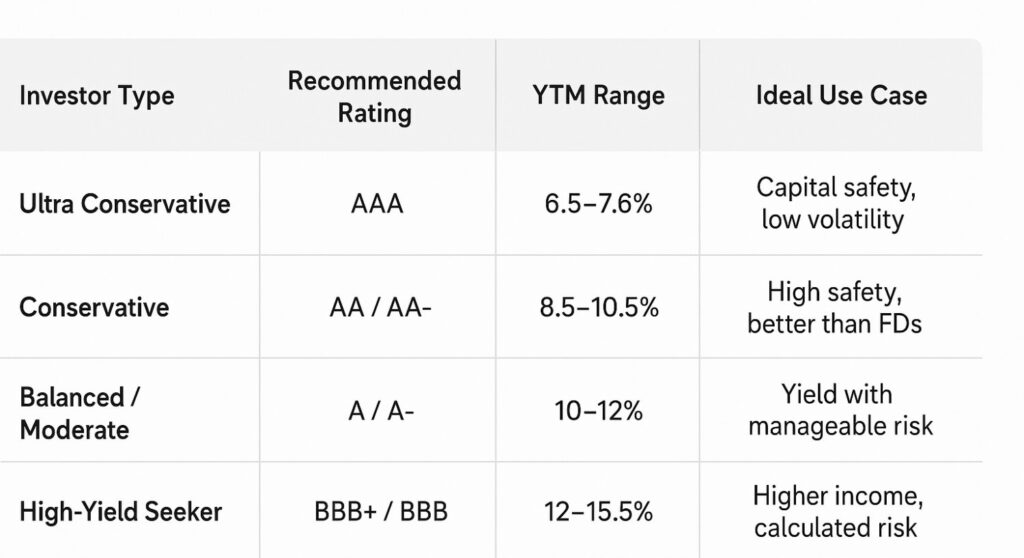
Bond Yield
Market Experts on Bond Selection
-
Always verify issuer fundamentals — even for high-rated bonds.
-
Prefer shorter maturities if you’re taking on higher credit risk.
-
Diversify across ratings, issuers, and maturities.
-
Avoid over-allocating to high-yield or unrated bonds.