Earn 9%–15% on Senior Secured Bonds.
Lower risk. Fixed returns. Start investing on Aspero with just ₹10,000.
Explore Bonds


Coupon Rate vs Yield: What Every Bond Investor Needs to Know
If bonds are your gateway to low-risk investing, understanding coupon rate and yield is non-negotiable.
Think of it like owning a rental property: the rent you charge is fixed, but the actual return on your investment depends on how much you paid for the property. The same principle applies in bond investing.
Bonds are essentially loans to the government or a company, and in return, they pay you regular interest and repay principal at maturity. But how much you really earn from it depends not just on what it promises to pay (the coupon), but also on what you paid for it (the yield). One might pay a set interest rate, another might offer a better return purely because you bought it at a different price.
That’s why, whether you’re seeking a predictable income stream or considering how interest rate fluctuations affect your fixed-income holdings, grasping the distinction between coupon rate and yield can make or break your bond investment decisions.
In short, coupon rate is the fixed interest paid, while yield reflects the actual return you earn, depending on the market price.
Let’s break this down further with examples and simple formulas.
What Is a Coupon Rate?
Bond coupon rate is the fixed annual interest a bond pays as a percentage of its face (par) value. It’s set when the bond is issued and remains fixed throughout the bond’s life.
| Formula:
Coupon Rate = (Annual Coupon Payment / Face Value) × 100 |
Example:
A bond with a face value of ₹1,000 paying ₹50 annually has a coupon rate of 5%.
Why it matters:
The coupon rate tells you how much interest the bond pays each year, based on its face value. But it doesn’t change if the bond’s price goes up or down.
| Did You Know?
Back when bonds were issued as physical certificates, they came with detachable paper coupons that investors would tear off and submit to receive their interest payments. That’s actually where the term “coupon rate” comes from. |
A common mistake investors often make is confusing the coupon rate with the return they’ll actually earn. That depends on how much they pay for the bond, which brings us to yield.
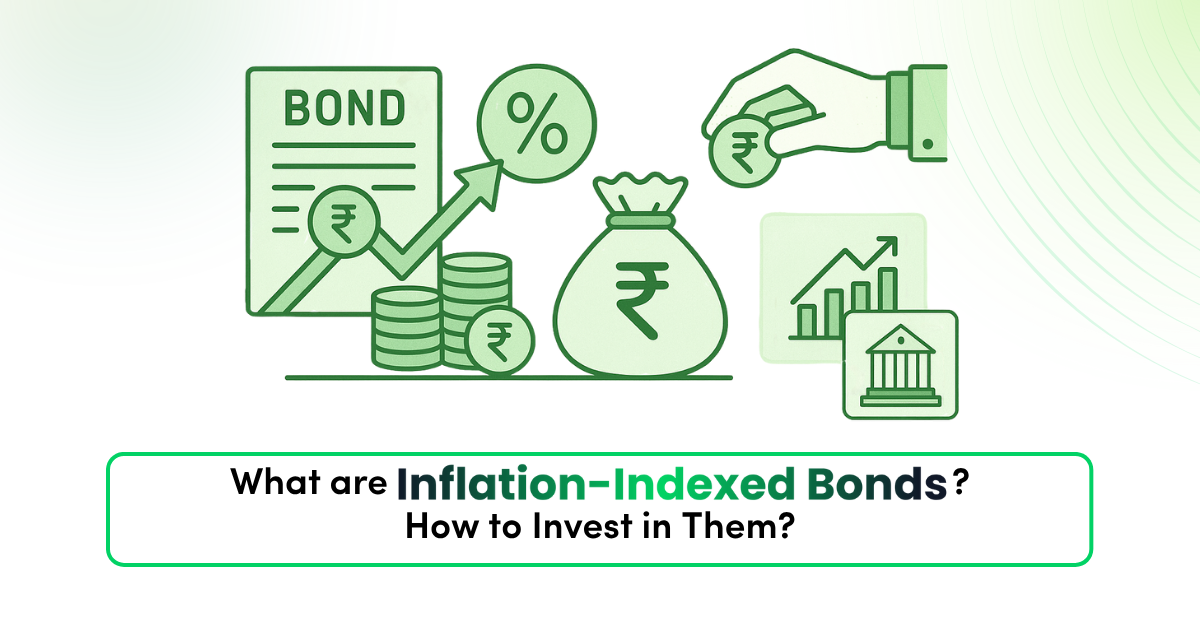
Read More: What Are Inflation-Indexed Bonds in India?
What Is Bond Yield?
Yield reflects the real return you earn on a bond based on its current market price, not its original face value.
Bond yield, unlike coupon rate, fluctuates with the market. As interest rates change or investor demand shifts, the price of a bond moves up or down, and so does its yield.
| Formula:
Current Yield = (Annual Coupon Payment / Current Market Price) × 100 |
Example:
Let’s say that the same ₹1,000 bond with a ₹50 annual coupon is now selling at ₹900.
Current Yield = (₹50 / ₹900) × 100 = 5.5%
So even though the coupon rate is still 5%, your actual return is higher because you bought the bond at a discount.
Bond yield shows how much return you’re earning based on the bond’s current price, not its face value.
It’s easy to confuse bond yield with Yield to Maturity (YTM), but they’re not the same.
YTM is a broader metric. It estimates the total return if the bond is held till maturity, factoring in not just the coupon payments, but also any capital gains or losses you’ll incur based on the price you paid.
| Did You Know?
In 1981, U.S. 10-year Treasury yields hit a record 15.82%, the highest bond yield in history. But guess who almost got there? India. In April 1996, India’s 10-year government bond yield touched a massive 14.76%, just shy of the U.S. yield. |
Coupon Rate vs Yield: Key Differences
Here’s a simple breakdown to clarify the two concepts for bond investment:
| Feature | Coupon Rate | Yield |
| Definition | Fixed interest rate on face value | Actual return based on market price |
| Changes over time | Fixed | Can fluctuate |
| Determined by | Issuer | Market dynamics (price, interest rates) |
| Use case | Income forecasting | Return analysis |
| Example | 5% on ₹1,000 bond | 5.5% if bought at ₹900 |
This is why experienced investors always check yield, not just the coupon rate. If the bond is priced lower in the market, your effective return increases and vice versa.
How Market Price Affects Yield: Coupon Rate vs Yield
Bond yields move inversely with bond prices.
Which means:
- If bond prices drop, yield increases or is greater than the coupon rate
- If bond prices rise, yield decreases or is lesser than the coupon rate
Example 1-Discount Bond:
- Bond face value: ₹1,000
- Coupon: ₹50
- Market price: ₹900
- Yield = (50 / 900) × 100 = 5.5%
When bond prices drop, yield rises, because you’re getting the same interest for less money invested.
Example 2-Premium Bond:
- Bond face value: ₹1,000
- Coupon: ₹50
- Market price: ₹1,100
- Yield = (50 / 1,100) × 100 = 4.5%
When bond prices rise, yield drops, because you’re getting the same interest for more money invested.
Why does this happen?
It all comes down to interest rate movements and market demand.
When interest rates rise, newly issued bonds offer higher coupon rates. Existing bonds with lower rates become less attractive, so their prices drop, causing yields to rise. On the other hand, when interest rates fall, existing bonds with higher coupon rates become more valuable. Their prices go up, and yields drop as a result.
Which One Matters More, Coupon Rate vs Yield?
The answer depends on your investment goal:
- If you’re a fixed-income investor, holding bonds to maturity, you’ll care more about the coupon rate for stable income.
- If you’re trading in the secondary market or looking at total returns, yield is more important.
In volatile markets, yield offers a more accurate picture of what you’re actually earning, especially when buying at a discount or premium.
For bond investors, the coupon rate tells you how much you’ll earn annually, but the yield tells you what the bond is truly worth today.
Invest in Bonds With Aspero
Coupon rate is what the issuer promises. Yield is what you actually get.
This simple distinction helps you avoid common investing pitfalls, like overpaying for bonds with attractive-looking coupons or underestimating the value of a bond priced below par. Next time you compare bond options, check both figures. Yield tells you if the bond is a good deal right now, while the coupon rate forecasts your fixed income over time.
Knowing the difference between coupon and yield helps you invest smartly. You can explore a variety of fixed-savings instruments on Aspero to diversify your portfolio.
FAQs: Coupon Rate vs Yield
- Is coupon rate the same as yield?
No. Coupon rate is fixed, while yield changes based on the bond’s current price. - Can a bond’s yield change over time?
Yes. As market prices shift, so does the bond’s yield. - Why is a bond’s yield higher than its coupon rate?
If the bond is bought below face value (at a discount), you earn the same interest but invest less, so your return (yield) is higher. - Does a high coupon mean a better bond?
Not always. A high coupon may reflect higher risk or outdated interest rates. Always check the yield, too.
5. How do I know if a bond is a good buy?
Look at the yield, credit rating, and your investment horizon. A good bond matches both your goals and risk comfort.